Showing posts with label pirate attacks. Show all posts

Thursday, February 4, 2010

Pirates in the News: February 4, 2010

Fish gotta swim, birds gotta fly, emerging successful systems gotta propagate until they reach the boundaries of their sustainability, therefore pirates gotta hijack cargo on the high seas.

That said, Pirates have captured ships from Libya, Cambodia, one full of Hyndais that the car company seems bent on spinning into PR soundbites, one from Singapore, etc... In fact it has reported that pirate attacks are almost doubled between 2008 and 2009. There is plenty of teeth gnashing, gun waving, and suggestions of a harder line approach and analysis of why even with increased military intervention piracy continues to grow.

Somali based pirate rings are expanding their areas of operation, and increasing their numbers because what their doing is revitalizing the economy of their region. Not only are they setting up financial exchanges and investing in real estate, but the depleted fishing along the coast of the Horn of Africa is recovering from the overfishing by international companies, and fisherman along the coast as far as Kenya are able to increasingly maintain their livelihood, all thanks to the threat of pirate attack in those waters.
Fisherman in Kenya have reported bumper catches of shark and shellfish because commercial fishing boats from China and Japan have been scared away.

Now the fishermen are able to catch up to £200 worth of fish per day in an area where the average daily earnings are less than £5.

Like other tax-free areas that maintain their autonomy in complex regions, Somalia's quasi-independent Puntland is seeing a rebirth nourished by the thriving piracy industry.

Ransoms continue to be paid and ships continue to be released with efficiency, even when one sees high profile incidents like shootouts once ransoms have been paid where pirates take out their own compatriots. The simple truth is that most tankers captured are ransomed and released, at increasingly profitable rates for pirates. It's no picnic for sailors but piracy is too effective and distributed to be going away any time soon and shippers have to adapt.

While the military efforts against piracy are continuing to capture and thwart some attacks, finding their resources stretched, the question of what one does with a captured pirate is no less clear than it was two years ago. Different countries suggest that international tribunals are the answer, individual countries try the pirates their warships capture but run into problems both political and legal with a frequency that makes it difficult to create any single method for trial in any one country, much less internationally. Some pirates are simply released because no country wants to try them. The most famous pirate on trial in the USA is still Abduwali Abdukhadir Muse, on trial in New York, who I will be devoted another post to later this week.

Interpol is trying to track pirate money, and claims to see no links to al-Qaeda, despite concerns that radical islamist groups are associated with Somali pirate groups.

On a personal note, it's a LOT easier to find pictures of Somali Pirates compared to 2007 when I started this blog and I kept having to reuse that one picture of two guys in a skiff with an AK.

While the idea of "what to do about pirates?" is still very present in dialogue in the west, a group of Somali pirates recently reached out to groups working in Haiti, trying to figure out how they can donate to relief efforts.

The “pirates” typically redistribute a significant portion of their profits
among relatives and the local population. In their operations, the “pirates”
urge transnational corporations that own the cargo confiscated to pay back in
cash as banks can not operate in Somalia.

”The humanitarian aid to Haiti can not be controlled by the United States and
European countries; they have no moral authority to do so. They are the ones
pirating mankind for many years,” said the Somali spokesman.

When observing how piracy has invigorated that area of Africa, despite the parasitic nature of the economy, one cannot help but think that maybe the pirates are on to something.

Friday, May 1, 2009

Pirates in the News, Spring 09

... and wow was there a lot. Since the taking of the Maersk Alabama there have been squadrons of articles about pirates, pirate attacks and pirates in general.

The Maersk Alabama is still making news, here's a smattering of different articles about it that are interesting:

Interview with a crewman of the Maersk Alabama, and here, finally, the Captain of the Maersk Alabama talks about piracy in general:
Richard Phillips, captain of the Maersk Alabama, has just begun testifying about his ordeal as a hostage of Somalian pirates before the Senate Foreign Relations Committee.

In his statement, the captain told senators that he didn't believe arming crew members was the solution to the increasing problem of pirate attacks.

"These pirates are evolving and we must stay with the curve and evolve with them to stop these incidents from happening," said Phillips, 53, of Underhill, Vt.

Phillips was freed when U.S. Navy snipers killed three pirates aboard the lifeboat who were guarding him on April 12. The Navy returned those bodies today to Somalian officials, transferring them in white wooden coffins. The Associated Press has more detailed hearing coverage here.

A comment on Obama
Then, in the days/week after there were a bunch of interesting articles, linked here for your perusal.

Timeline of pirate captures.

Two more pirate attacks foiled, including... Pirate attack foiled with deck chair!

A Puntland Court Jails 37 Pirates, 9 Pirates were arrested in the Seychelles

More has been coming out of Somalia about motivation for piracy there, specifically, and we've heard this before, dear reader, that the sale of fishing rights to other nations pushed coastal communities into piracy.

Wednesday, July 2, 2008

Horrible Things That Could Happen to you at Sea: Barrel of Roaches

Today's installment of "Horrible Things that Could Happen to you at Sea," delves into things that pirates would do to people on ships they boarded.

In order to learn the location of valuables, or just for the pure enjoyment of torturing someone (it gets really boring at sea), pirates came up with some awful and awfully creative methods of torture.Barrel of Roaches:

While not the most lethal of torture choices, a Barrel of roaches is still pretty icky. One, you're sealed in the barrel, two, dozens and dozens of squirming, roaches all over your whole body. Getting squished as you move around, squeaking and crunching. They would probably eat little things off your body, drink your sweat which i suspect would be pouring off you in the hot, sealed barrel you're sharing with a bunch of roaches.

When their non-fatal tortures are rather unpleasant, stay tuned as I cover progressively more and more disquieting methods of pirate information extrication in the coming weeks.

Monday, April 28, 2008

Pirates in the News! April 28, 2008

Howdy! This week I'm posting from delightful, landlocked West Texas, I was called away from maritime haunts to visit my parents for their 40th Wedding Anniversary. So Happy Anniversary Mom and Dad! Arrrr!

There's been plenty of piracy in the news this past week, not the least of which seems like a game of catch up by European Nations to be one of the cool kids in pirate thwarting after France's successful return of La Ponant, and France's associated "plan pirate-mer", piracy foreign policy plans that were announced this last week (sorry for those of you who don't speak french).

Spanish, German and Italian Ships have all been sent down to the Gulf of Aden off Somalia, several pirate attacks have been thwarted and these have been making the rounds of the international news.

Of course, what's really interesting is what hasn't been front page news:

In the past couple of days, the story that pirates off the coast of Yemen attacked a 150,000 deadweight ton oil tanker with a rocket got pushed to the back pages (New York Times, AFP, and Wall Street Journal, for example). Each article attributes at least a pip of the recent increase in the price of oil to the attack, even though the attack failed to cause any significant damage.
This quote is from a very interesting article by Eugene Gholz,

Pirates are something of a problem for small ships traveling near Somalia and Yemen. They can approach yachts, tugs, and even small cargo ships. Captains and passengers on these types of vessel should take precautions, perhaps stay out of the dangerous waters and certainly stay alert during transits.

But oil tankers are vastly larger ships — in many cases over a thousand feet long. Pirate boats have trouble approaching tankers at all (dealing with the waves that the tanker pushes outward as it plows through the water), let alone pirates’ subsequent struggle to clamber up the side of a tanker while it is underway (necessary to board the ship and capture its crew and cargo). And clambering would really be necessary: the deck of an oil tanker is quite high off the waterline, well above the deck height of pirates’ boats.

The attack on the Japanese tanker this week may represent an escalation in pirate tactics — firing a rocket at the tanker (rather than just threatening ships with small arms fire), presumably in an attempt to force the tanker to stop so that the pirates could board it. But tankers are so big that rocket fire has almost no effect. The pirates pursued the Japanese tanker for hours and were only able to put a small hole in the ship that had no effect on its ability to continue its journey.

And of course one expects to hear of successes against Somali pirates more than failures, but I find it really compelling when we hear about people rocketing oil tankers, if for no other reason than the drama, and the sheer balls of such an attack. While obviously, as Gholz points out, a few rockets are not enough to take down a super-tanker and the flow of oil across the seas is hardly imperiled, but isn't that pretty interesting news for its own sake?

Wednesday, April 16, 2008

Pirates in the News! April 16.2008


While the Crew of La Ponant has returned safely to their countries of origin it's time to catch up on pirate news last week:

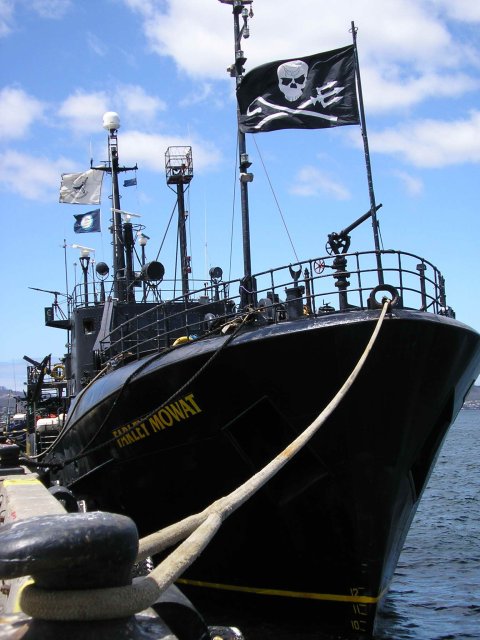
Eclipsed by news of La Ponant, a different, Australian crew was ransomed last week, the Sea Shepard anti-seal-hunting vessel's

Surrounded by media and shipmates of the seized Farley Mowat anti-sealing vessel, U.S.-based Sea Shepherd Conservation Society head Paul Watson described to reporters outside a Sydney courthouse Monday, the similarities between the arrests of two senior crew members and a pirate tale.

“We don’t regard it as bail, we regard it as ransom. It’s a pirate action. They boarded our vessel on the high seas at gunpoint. They stole all of our property, our cameras,” Watson said before unloading a sack filled with $10,000 in Canadian toonies and bills, which he referred as “doubloons” or pirate gold.
The crew of the Farley Mowat face charges under Australia's Federal Fisheries act for approaching a seal-fishing vessel too closely without authorization as well as several individual accounts of obstruction.

The Malacca strait has long been a hotbed of pirate activity, but in the Pirate Whack-a-Mole on the High Seas (thanks you New York Times for the headline, you are truly the paper of record =P), but according to a Malaysian Defense official, there wasn't a single attack in 2007.
"From January to late December 2007, we recorded zero percent pirate attacks in the Malacca Straits and also recorded a reduction in pirate attacks in the waterways of Sabah and Sarawak (on Borneo Island)," Bashirabu Bakar told Bernama news agency.
One can easily see how a major security presence in one area deflects piracy to other, easier to pirate areas, and that's what's happened here. Similarly, it was reported a few months ago that certain areas of the Somalian Coast where joint military efforts have been protecting shipping have led to declines in piracy there.


Of course, International piracy continues with Nigeria and Somalia being the countries where the most attacks occurred according to the International Maritime Bureau.
Nigeria now ranks as the number one hot spot in the world this quarter, overtaking Indonesia for the first time in 16 years, the IMB said.

"Vessels have been fired upon and crew injured as a result. Many of the attacks are concentrated off Lagos," it said.

Indonesia, which fell to third spot, saw just four attacks in the first quarter compared with nine previously.

Of course, If you've been reading this blog, you know that Nigeria isn't taking its new status sitting down, just last week they sent another group of troops to help in the Nimassa area.

Also, I stumbled upon this blog in my piratey travels this week, it's fascinating.

Friday, March 21, 2008

Pirates in the News! March 21, 2008

Most of the pirate news this week comes out of Nigeria where piracy has been increasing in the past several months.

Nigeria is Africa's largest producer of oil and has a correlating high incidence of piracy feeding off of it. Officials are saying that the recent rise in pirate activity is because of a decrease in security in the region.
"Before, it was maybe one death every two months or once in a fortnight, but five deaths in five different locations and five different companies?" says Paul Kirubakaran, managing director of the Seabless fishing company, whose boats are among the 200 shrimp and fishing vessels docked in Nigeria's commercial capital since a strike began in January. "When people are killed like this how can we ask them to go back [to sea]?"
With the increase in piracy there are also increased reporting of raids and other incidents around the coast of Nigeria. Such as this raid against pirates last week.
"We have been receiving reports of robberies on that route, so we positioned our men. This morning, unknown to the pirates, our men were around the area when they tried to rob some passenger boats and we engaged them in a long gun battle."


In Somalia the Svitzer Korsakov and its crew was released by its pirate captors:

A local government official says the British captain, Irish engineer and four Russian crew aboard the Svitzer Korsakov are all "safe and healthy" after being held for more than a month.

Ahmed Said Aw-Nur, ports minister in Puntland, a semi-autonomous region of northeast Somalia, says the ship was freed after its Danish owner "negotiated with the criminals and paid hundreds of thousands of dollars for ransom."

The Canadian Press reports that the hostages were released after a ransom of $700,000 was paid.

Saturday, January 26, 2008

Pirates in the News! January 26, 2008


To start out with a tale of high level petyness from a civic organization, a lady in England was fined and forced to take down a pirate flag in her garden.

The Nigerian Navy Killed a pirate and arrested three others, on the Sombreiro River.


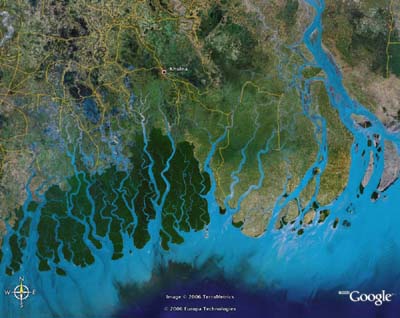
And in Bangladesh, pirate gangs continue to fight with government forces in the Sundarbans, this time uniting gangs to fight the army.

Sunday, January 13, 2008

Modern Pirate Attacks Worldwide, Map

For those of you interested in Modern Piracy check out this excellent website that shows pirate attacks worldwide as they happen.

Pirates in the News! January 14, 2008


The statistics are in and

Pirates Attacks have Increased for the first time since 2003

According to the International Maritime Bureau (IMB) These increases are seen mostly around Africa where pirates have gained a significant foothold in recent years


  • Two crew men were injured on Wednesday when gunmen attacked four supply ships near Bonny Island, Nigeria, an export point for about 400 000 barrels of oil per day.

  • A ship watchkeeper was tied up and severely beaten when pirates boarded a chemical tanker at anchorage near Lagos. The ship lost valuable equipment.

  • Four armed robbers in a small rubber boat attempted to board a bulk carrier at anchor in Lagos harbour using a grappling hook. The alarm was raised but the robbers escaped.

  • Seven pirates armed with knives used a wooden boat to board a large container ship while it was anchoring at Haiphong, Vietnam. They attacked three sailors and stole ship stores.

    There were 263 reported attacks on ships in 2007 compared with 239 attacks in 2006. In total 64 sailors were assaulted and injured and 292 held hostage, compared with just 17 injuries and 188 hostages in 2006.

  • Also, not exactly pirate news, but worth reporting, The United States' Pirate Party (related to Internet freedoms) has thrown its support behind Barack Obama.